
Cart
0
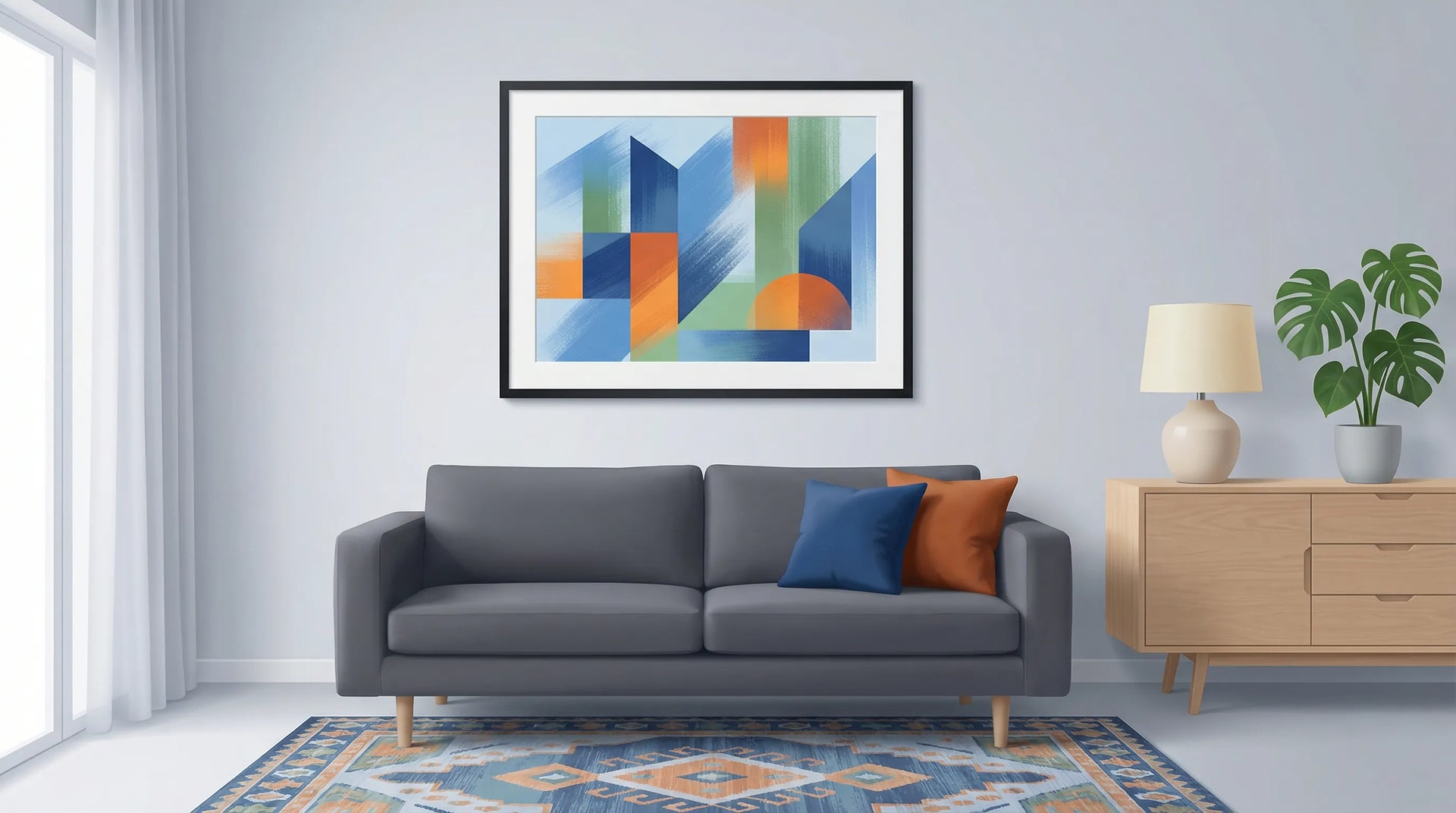
Buying art online has never been easier, but “easy” is not the same as “smart”. If you are searching for art prints for sale, the challenge is not finding something you like, it is choosing a print that looks great in real life, fits your space, and holds up over time.
This guide walks you through the decisions that actually matter: print quality, sizing, framing, colour accuracy, total cost, shipping, and how to avoid common mistakes.
Start with the outcome you want (not the image you like)
A smart purchase begins with clarity about what the print needs to do in the room.
- Set the mood: calm (soft neutrals), energising (high contrast), focused (minimal composition), cosy (warm tones).
- Anchor a space: one large statement piece often looks more intentional than several small “filler” prints.
- Solve a practical problem: narrow wall, awkward corner, low light area, rental-friendly refresh.
If you only shop by thumbnail, you risk ending up with a print that is the wrong scale, too busy, or not cohesive with your existing materials (wood tones, metals, textiles).
Choose the right size by measuring, then scaling visually
Size is the number one reason art looks “off” once it is on the wall. Before you decide, do two quick checks.
1) Measure the available wall space
As a rule of thumb, wall art above a sofa, sideboard, or bed often looks balanced when it spans roughly two-thirds to three-quarters of the furniture width. This is not a strict rule, but it is a reliable starting point.
2) Test the scale at 100 percent
Use painter’s tape to mark out the print size on the wall, or cut kraft paper to the exact dimensions. This avoids the common mistake of buying a print that is “fine” on screen but visually too small in the room.

UK and EU sizing tip
If you are in the UK or Europe, you will often see A-sizes (A4, A3, A2). If you want a quick reference for the A-series standard dimensions, ISO 216 is the official standard (ISO 216 overview). Knowing this helps you choose frames more easily.
Print quality: what to look for (and what to ask)
When browsing art prints for sale, product pages can be vague. You do not need to be a print expert, you just need to check a few specifics that correlate strongly with quality.
Paper: the “finish” changes everything
Paper choice affects colour depth, glare, and the perceived sharpness of the artwork.
| Paper / finish (common options) | How it looks | Best for | Watch-outs |
|---|---|---|---|
| Matte (uncoated or matte coated) | Soft, low glare | Minimalist art, photography, bright rooms | Can look flatter in low light |
| Satin / lustre | Slight sheen, richer blacks | Photography, high-contrast art | Can reflect light near windows |
| Gloss | Very shiny, punchy colours | Pop art, modern graphics | Glare can be distracting |
| Textured (fine art / cotton rag style) | Subtle texture, “gallery” feel | Illustrations, painterly work | Texture can soften tiny details |
If a seller does not name the finish at all, consider asking. Paper is not a minor detail, it is the surface you will look at every day.
Ink and longevity (especially for sunlit rooms)
If the print will hang in a bright space, fade resistance matters. Museums and conservators generally advise limiting light exposure for works on paper, especially direct sunlight (Smithsonian preservation guidance).
You do not need “museum grade” for every room, but you should:
- Avoid placing prints in direct sun if possible.
- Consider UV-filtering glazing if you frame behind glass.
- Prefer sellers who describe their production clearly (ink type, paper type, and printing method).
Sharpness: a quick way to spot low-quality files
Zoom in on the product image if the website allows it.
- Good signs: crisp edges, clean lines, intentional grain.
- Bad signs: fuzzy text, stair-stepped diagonals, visible pixel blocks.
If the artwork includes typography or fine linework, poor resolution shows immediately once printed.
Colour accuracy: avoid “surprise” prints
Your phone screen is not a reliable colour reference. Brightness is often high, and colours vary across devices.
To buy smart:
- Look for multiple photos (ideally a close-up and an in-room image).
- If your room is colour-sensitive (for example, you are matching a specific paint tone), favour art with a palette that has some tolerance, like neutrals, black and white, or muted colours.
- If available, check whether the shop offers theme or colour-based browsing so you can stay consistent across a room.
Framed vs unframed: decide based on time, tools, and finish
Framing is not only aesthetic, it is practical.
When it makes sense to buy ready-to-hang
Choose ready-to-hang options if:
- You want a finished look immediately.
- You do not own tools (or do not want to measure and level).
- You are buying art for a gift, a short deadline, or a staged space.
Dreamprint.art, for example, offers ready-to-hang art prints, with multiple size options and framing available, which is ideal if you want to reduce the number of decisions and get a consistent finish.
When unframed is the smarter buy
Unframed can be a better choice if:
- You already have frames that match your interior.
- You want a specific frame profile not offered online.
- You plan to swap prints seasonally.
A useful compromise is buying unframed for smaller sizes (where framing is affordable locally) and buying framed for large statement pieces (where shipping and fit errors are more painful).

Budgeting: compare the total cost, not just the print price
“Smart” buying means calculating your real all-in cost.
Here are the common hidden or underestimated costs:
- Frame and mount (often equals or exceeds the print cost for larger sizes)
- Shipping (Dreamprint.art highlights free shipping, which can materially change value)
- Customs or import VAT (depends on destination and shipping origin)
- Replacement risk if you choose a fragile framing option for a high-traffic area
If you are furnishing a whole room, decide what matters most.
- Spend more on a single focal piece you will keep for years.
- Save on supporting pieces where you might change styles later.
Matching art to your space (without overthinking it)
A quick approach that works well for most homes:
Use one of three “cohesion anchors”
Pick one anchor and stay consistent.
- Colour anchor: repeat 1 to 2 colours already in your rug, cushions, or curtains.
- Subject anchor: botanicals, abstracts, architecture, portraits.
- Material anchor: black frames throughout, or light oak frames throughout.
This keeps the room cohesive even if you mix artists and styles.
Think about viewing distance
A print that looks subtle up close may disappear across the room.
- For long viewing distances (hallways, large living rooms), favour strong shapes and higher contrast.
- For close viewing (bedside, desk nook), detail-heavy prints can be more rewarding.
How to vet an online shop selling art prints
If you are comparing websites offering art prints for sale, look for signals of a professional operation.
Product information that should be easy to find
- Available sizes
- Paper or print finish
- Framing options (if any)
- Shipping destinations and delivery expectations
- Return and damage policy
Made on demand: what it means for you
Made-on-demand printing (which Dreamprint.art offers) can be a positive because prints are produced to order rather than sitting in storage. Practically, it means:
- You may get a fresher print.
- Production time matters, check the estimated dispatch window.
- Returns can differ from mass-produced retail, read the policy carefully.
Security and checkout
For any online purchase, ensure checkout is secure and that the retailer clearly states payment and customer service channels. If you are buying internationally, currency support and transparent shipping information help prevent unpleasant surprises.
Avoid these common (and expensive) mistakes
Buying too small
If you are unsure between two sizes, the larger option often looks more intentional, especially above furniture.
Picking art that clashes with lighting
Highly glossy finishes in a bright room can create glare. Conversely, very matte prints in a dim hallway can look flat.
Treating frames as an afterthought
If you buy unframed, measure for the frame before you purchase.
- Confirm whether the listed size is the paper size or the image size.
- Decide whether you want a mount (mat) because it changes the required frame size.
Ignoring room humidity and heat
Bathrooms and kitchens can be harsh environments for paper. If you want art there, consider placement away from steam and splashes, and use protective framing.
A practical “buy smart” checklist
Use this right before you click checkout.
- You measured the wall and previewed the size with tape or paper.
- You chose a finish that suits your lighting (matte vs satin vs gloss).
- You know whether you are buying framed or unframed, and what that implies.
- You reviewed shipping, delivery expectations, and damage/return handling.
- You compared the total cost (including frame and shipping).
- You have a cohesion anchor (colour, subject, or frame material) so the print fits your space.
Buying from dreamprint.art: when it is a strong fit
If your priority is convenience and a clean, finished result, dreamprint.art is positioned well for it: ready-to-hang posters and art prints, produced made on demand, with framing available, free shipping, and worldwide delivery. It is also useful if you like browsing by theme or colour, which tends to lead to more cohesive choices.
The smartest way to use a curated marketplace is to treat it like a shortlist: narrow by style, choose your size based on measurements, then pick the piece that best supports the mood of the room.
Final thought: buy one great print, then build around it
A well-chosen print can do more than “fill a wall”. It can set the tone of a room and make everything else feel more deliberate. If you focus on size, finish, framing, and total cost, you will end up with art you are happy to live with, not just something that looked good in a thumbnail.

